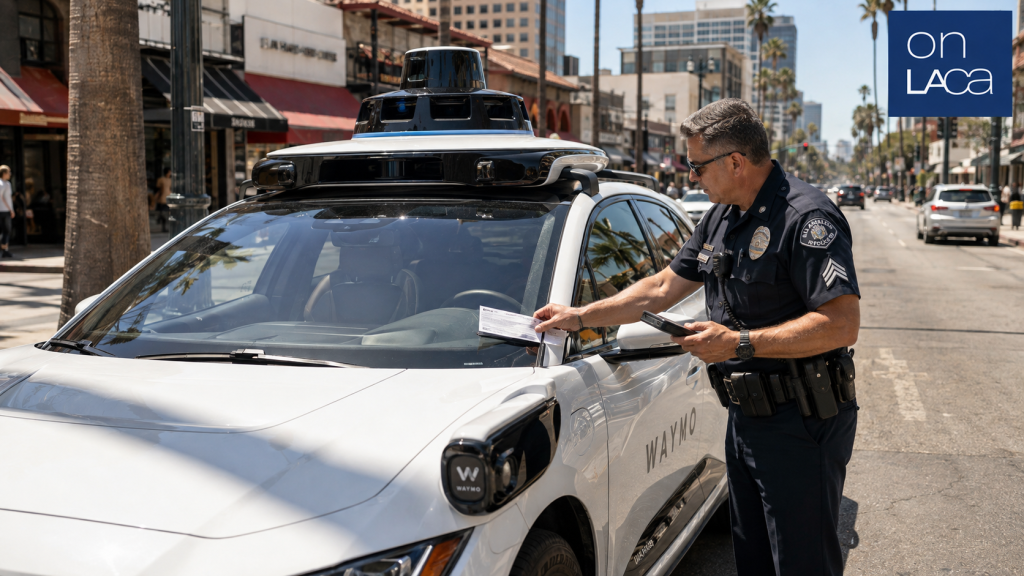
Are we to believe Waymo’s never break the traffic laws? As it turns out, police were not permitted to give tickets to autonomous cars (if they could even figure out how to do it), until July 1st of this year–yes, until last month.
As of last month, California law enforcement can issue official traffic violation notices (“Notices of AV Noncompliance”) directly to autonomous vehicle manufacturers like Waymo under Assembly Bill 1777. While police can ticket these driverless cars for moving violations, officers issue the citations to the company rather than a human driver–which, of course, doesn’t exist.
With a little help from AI, here is the history of ticketing the driverless car:
- Legislative Action: The state legislature first had to pass a bill (Assembly Bill 1777) to create a new category of citation altogether.
- DMV Rulemaking: Once the law was signed, the responsibility fell on the California DMV to design and approve the operational framework. It took state regulators until early 2026 to officially adopt the specific rules regarding the “Notices of Noncompliance” system.
California purposely delayed sweeping crackdowns to avoid stifling the burgeoning autonomous vehicle (AV) industry, positioning itself as a tech leader. However, the state was forced to finally act after a series of high-profile, disruptive incidents. Frequent “stoppage events” that blocked traffic, vehicles entering active emergency zones, and robotaxis obstructing firefighters made updating accountability laws an urgent public safety priority.
The resulting regulations finally went into effect on July 1, 2026, officially ending years of driverless immunity.