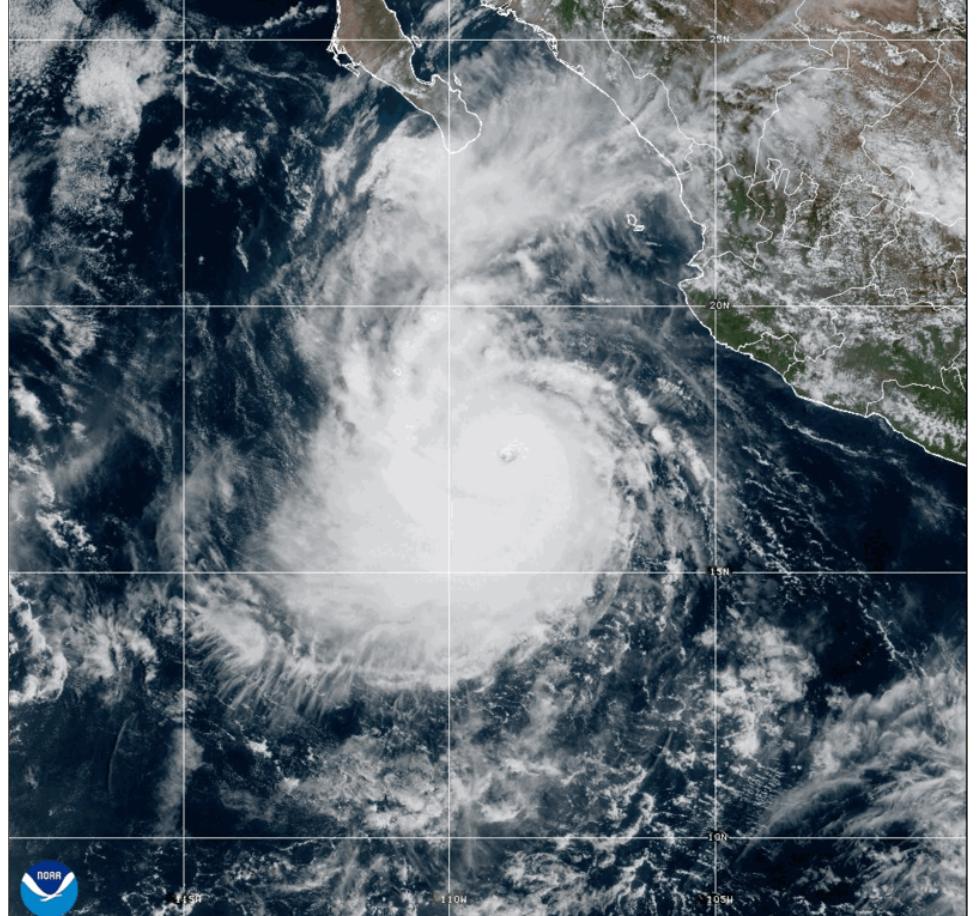
As if Hurricane Marie didn’t do enough damage, California’s battered coastline now has another marine concern coming its way: a ‘coastally trapped Kelvin wave’ associated with the rapidly strengthening El Niño. The enormous, largely invisible oceanic wave could raise sea levels along parts of the California coast by several inches—and potentially close to a foot—making already vulnerable beaches and coastal communities more susceptible to flooding and erosion.
Unlike a breaking wave, a Kelvin wave is a broad elevation of the ocean surface that can stretch thousands of miles and persist for weeks or months. Researchers tracking the current wave say it is moving north along Mexico and could reach Southern California in early October, followed days later by the Bay Area.
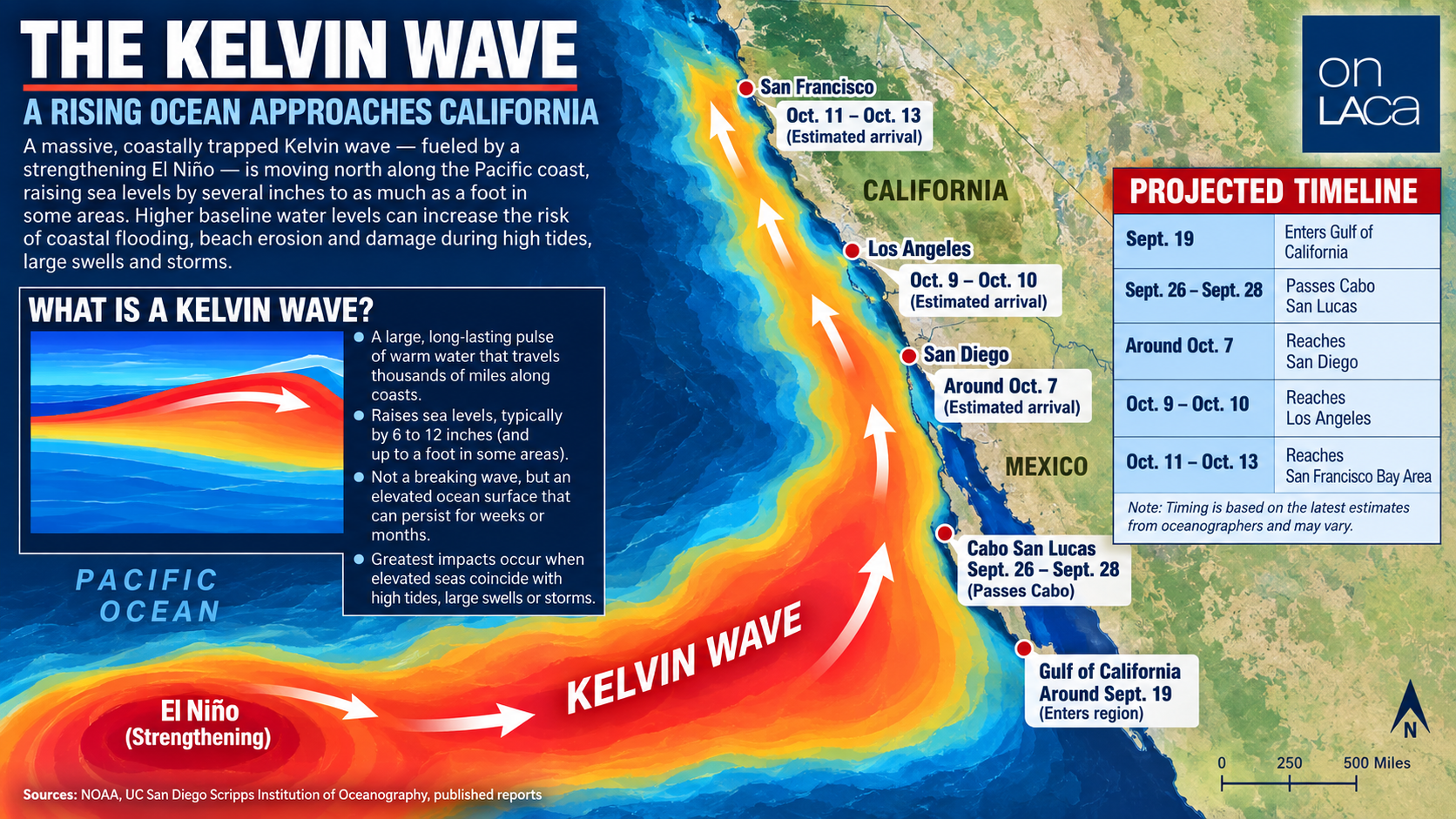
Infographic prepared by AI.
The danger comes when that elevated baseline combines with high tides, large surf or winter storms. After Hurricane Marie stripped beaches, damaged homes and infrastructure and forced emergency declarations in communities including Malibu, Dana Point and Laguna Beach, California will have less margin for error when the next round of high water arrives, later this month and in to next month.
Here is what to expect here in California as analyzed and forecast by by Gemini:
Southern California beaches are already highly vulnerable after being blasted by powerful autumn swells. The incoming Kelvin wave will worsen existing structural damage, strip sand beaches bare, and trigger dramatic coastal flooding.
Malibu (Los Angeles County): Massive beachhead washouts and a recent high-profile driveway sinkhole have already left 31 evacuated properties red-tagged. The added water height from the Kelvin wave threatens the structural integrity of dozens more oceanfront homes.
Long Beach (Los Angeles County): Recent heavy surf has already breached local seawalls, torn up the boardwalk, and forced evacuations. An additional several inches of elevated sea level, potentially approaching a foot under stronger conditions will leave the low-lying peninsula incredibly exposed to routine high tides.
Laguna Beach & Dana Point (Orange County): Cities have already declared local emergencies. Severe sand stripping at Aliso Beach has forced closures, while heavy wave action on Dana Point’s Beach Road has left multiple homes red- and yellow-tagged.
San Diego Coastline & Carlsbad: Carlsbad has been identified by geologists as an area of erosion. In response, San Diego’s mechanized beach teams are working along city beaches and the Mission Bay shoreline to buffer against the surge.
As the Kelvin wave marches north into October, it will shift its energy toward Northern California’s high-energy wave environments and famously fragile coastal cliffs.
Ocean Beach (San Francisco): Chronically vulnerable to rapid erosion, Ocean Beachwill face a massive threat as El Niño swells chew into the southern cliffs, threatening to undermine critical infrastructure like the Great Highway.
Pacifica (San Mateo County): Renowned for its fragile, crumbling bluffs, Pacifica’s clifftop residential structures will face severe undercutting as higher baselines allow waves to crash directly against the base of the cliffs rather than the beach.
Capitola & Santa Cruz Beaches (Santa Cruz County): This low-lying region is an extreme high-risk zone for tidal flooding. The compounding height of the Kelvin wave will significantly increase the risk of ocean water pushing straight into commercial village zones and public beach plazas.