You’ve read a lot about data centers–including Jeff Vaughn’s piece here on onLAca.com–and a lot of it is the toxic combination of negative and incorrect. Some politicians, like the LA County Board of Supervisors, have banned them, delayed them, or mandated they be ‘studied’ which means opportunities missed in this growing industry.
Some business interests are really advocating for data centers as an investment: “While the spend dwarfs the cost of the dot-com era, there’s a key structural difference… Unlike the dot-com build out, where capex was heavily front-loaded and declined as networks matured, we expect AI data center capex to keep rising as equipment is repeatedly upgraded.” according to a PwC Global Technology Analysis Report.
The landscape of global finance is shifting beneath our feet, anchored not in traditional factories or office towers, but in the sterile hum of data centers.
As AI transitions from a novelty into a foundational layer of the global economy, these massive facilities have transformed from sideline tech infrastructure into a premier asset class of the decade–as well as a source of controversy. While much of the public conversation focuses on the fortunes being made by Wall Street elites, a more localized financial shift may be quietly underway. If given a chance, and with reasonable ‘fences’ are put around agreements on safety, cost and management, the infusion of cash to local economies in terms of jobs and tax revenue is significant.
At the front lines of this investment surge are the tech giants themselves—hyperscalers like Microsoft, Alphabet, Amazon, and Meta—backed by institutional heavyweights like Blackstone and Brookfield. These entities are deploying hundreds of billions of dollars to build out the physical cloud, and they are increasingly targeting suburban and rural municipalities eager for economic revitalization. For local governments, welcoming a multi-billion-dollar data center project means injecting an immense, stable stream of commercial property and utility tax revenue into local coffers. This influx of private capital expands the local tax base overnight, allowing municipalities to fund critical public services without raising rates on residents.
The tangible benefits of this digital land grab are already reshaping communities across the country. In regions that have successfully attracted data center developers, the massive windfall of commercial tax revenue is being directly reinvested into public goods. Local school districts are building state-of-the-art facilities, municipal emergency services are receiving upgraded equipment, and essential infrastructure projects—from roads to water treatment facilities—are being fully funded by corporate tenants rather than homeowners. Making good deals ideally stabilizes taxes and could even help pay for some municipal needs.
It’s not a slam dunk–there are challenges that need to be addressed, especially ear and tear on the existing infrastructure and power grid. Data centers consume immense amounts of electricity and water, which can trigger valid anxieties regarding resident utility costs and local resource scarcity. To truly maximize the financial benefit, local pols must make good deals for the taxpayers–in monetary and community terms. Smart localities are requiring tech investors to fund regional electrical grid upgrades, invest heavily in local clean energy projects, and pay premium rates for municipal utilities. Win-win-win. It is the job of local leaders to assure that the data centers subsidize, rather than strain, the daily lives of the public.
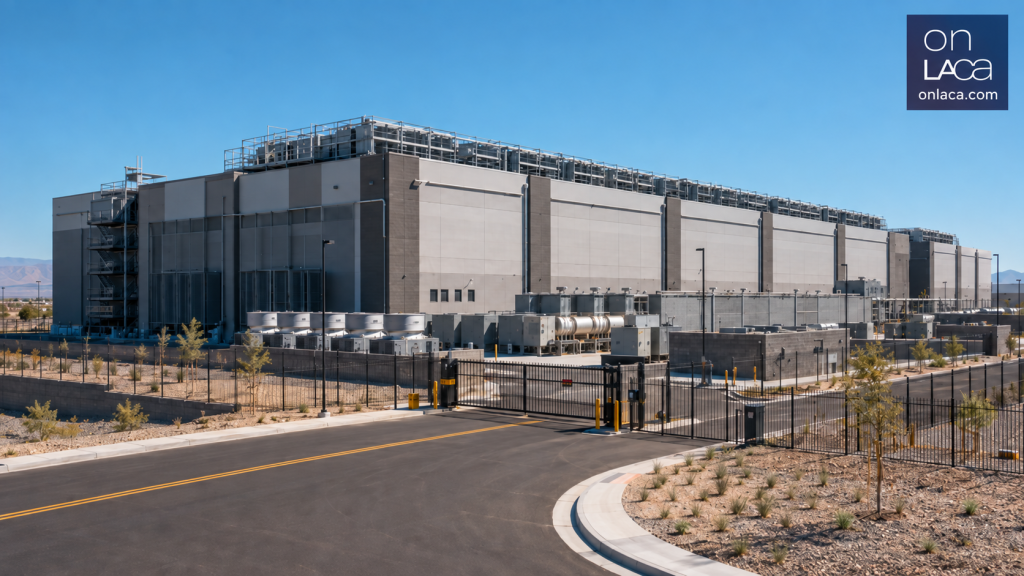
Several prominent tech companies and digital infrastructure developers are actively pushing ahead with data center expansions in California. In California, there are 278 operational data centers, with 9 under construction with 47 more planned.
Despite facing stricter state regulation on water usage, power grids, and local zoning, both major cloud “hyperscalers” and colocation operators are heavily investing across Northern and Southern California.
Major Hyperscalers
- Microsoft: The tech giant has broken ground on a self-owned 48-megawatt Alviso data center campus in San Jose, marking a shift toward building and managing its own physical footprint in the region.
- Amazon Web Services (AWS): AWS continues to expand its massive digital footprint in the state, utilizing major assets like its multi-building Mission College facility in Santa Clara and the Hayward Exchange complex.
Infrastructure & Commercial Real Estate Developers
- Digital Realty: This digital infrastructure giant is expanding its Santa Clara presence with a new four-story, 430,000-square-foot data center designed to use up to 10 million gallons of reclaimed water to mitigate local supply concerns. They also acquired a 5.4-acre site in Vernon for approximately $49 million to serve the underbuilt Southern California market.
- Prologis: Primarily known as a logistics and warehouse powerhouse, Prologis has pivoting hard into the digital economy, securing city approvals for a massive 396-megawatt data center campus in San Jose spanning four individual buildings.
- STACK Infrastructure: Backed by Blue Owl Capital, STACK has broken ground on a major 60-megawatt expansion at its SVY01 campus in Silicon Valley, which will include new processing data halls, manufacturing facilities, and a dedicated parking structure.
- Goodman Group: The global real estate developer is expanding directly into digital assets with its Los Angeles-area debut: the Goodman LAX01 Vernon facility. It is a 49.5-megawatt, three-story building spanning over 264,000 square feet.
The United States has 3,359 operational data centers, with 378 currently under construction and another 1,042 planned; They are not going away. It seems prudent for states, cities and towns–and investors–to figure out how to get a piece of the data center action.
AI helped compile this story