Karen Bass spent an hour on KFI’s John Kobylt Show blaming everyone but herself for the pitiful fire response, the growing homelessness, and the dangerous LA streets. At fault: The LAFD. The County Board of Supes. LAHSA. Garcetti. Weather. Her Chief of Staff. Not at fault: Mayor Karen Bass. No lessons-learned, no accountability.
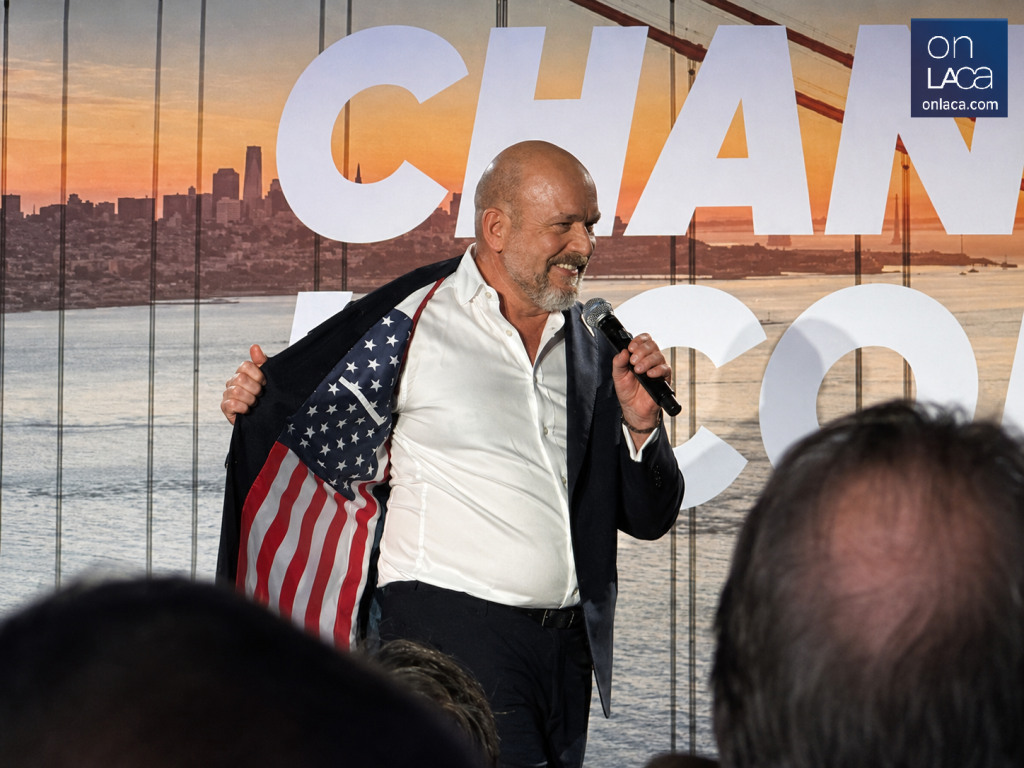
There was a small, invited crowd of about 40 who actually occasionally cheered for the mayor, though the sentiment in the room felt like, ‘at least she isn’t as bad as the Socialist’, which is a bit odd given that Bass is a Fidel Castro fan and, on the show, proudly claimed some DSA members support her.
Spencer Pratt has responded to the interview on X:
“Thank God for John Kobylt. For decades, on LA’s flagship station, KFI, he’s been a unique voice of sanity in the absolute clown world of Los Angeles bureaucracy and government, and I hope he never retires. He’s deservedly ruthless to our city’s most absurd hacks in government. He’s also been Karen Bass’ most compelling and outspoken critic, so when he announced that Karen had struck a deal to come on his show, I was intrigued, but I was not surprised. In the past 2 weeks, I’ve faced an onslaught of calls and messages from people connected to Karen asking if I would meet with her face-to-face, so it has been clear that she’s desperate to find inroads to communicating with the significant base of the electorate who voted for me in June. She’s stopped short of doing anything to actually earn their votes, but she is hoping that she can compel our allies to give her a chance to appear like she’s in our tent.” Read his long, strong comments here.
In one truly odd moment, Bass claimed that she had just learned that giving tents to the homeless (which she refers to as ‘the unhoused’) was first done by Mayor Richard Riordan. According to AI, Riordan did pass out tents–in 2017 as a part of a foundation effort, NOT during his tenure as Mayor which ended in 2001.
Here is a transcript from the iHeart.com podcast page. Be aware that even the iHeart page says there may be mistakes–for instance, it’s John Kobylt, not Kobelt, and Karen Bass, not Darren Bass. But you can take a look and judge for yourself.
John Kobelt Show, and we are live in the performance
room on the fifth floor here in the IHARD building,
and welcome everybody, our special.Speaker 3 (01:20):
Guest, L.A.Speaker 4 (01:22):
Mayor Karen Bass.Speaker 3 (01:25):
Hello.Speaker 4 (01:28):
I don’t know if we could live up to that promo,
but we’re going to try.Speaker 3 (01:32):
Oh, no.Speaker 1 (01:33):
I’ve got a lot of material here. And in fact,
I don’t know if they told you, this will probably
take about three hours.Speaker 3 (01:39):
Oh, great.
Speaker 4 (01:40):
Consider it like a deposition.
Speaker 3 (01:42):
Are these all my files?
Speaker 1 (01:43):
Yes, these are the vast files. So I wanted to
start out quickly. I know there’s a lot of expectations and.
Speaker 4 (01:50):
There’s a lot of chatter going on. And just to reiterate,
I told this last hour, we did meet a few
weeks ago. We had dinner along with Tracy Park and
my wife, Debra. Debra.
Speaker 1 (02:02):
And about arranging the mayor to come on the show.
And it was a pretty simple conversation. I just said,
I don’t want any conditions. And she said, no conditions.
So that was the extent of it. And, you know,
I know why you’re coming on. You’ve never come on
in 20 years.
Speaker 3 (02:19):
I don’t think I’ve ever been invited before.
Speaker 4 (02:24):
I’ll have to check with Ray on that. You certainly
have been a topic of conversation.
Speaker 3 (02:28):
But you might have put my head on a stick.
Did we ever put? Yes, you did. Yes, you did.
Speaker 1 (02:35):
We put the Republicans’ heads on sticks for going along
with you.
Speaker 3 (02:39):
You know what I told him? This was when I
was Speaker of the Assembly, and we were trying to
close a $ 40 billion deficit, and we were worried that
the state was going to go into default. And so
he kept putting Republicans’ heads on stakes if they thought
about voting for taxes. But what I told him is
that as Speaker, I was Speaker to both Democrats and Republicans,
(03:01):
which means he made me increase security on my Republican colleagues.
Speaker 4 (03:07):
And do you remember what you called Ken and I,
or at least alluded to us?
Speaker 3 (03:10):
Oh, no, but I remember what you called me.
Speaker 4 (03:12):
Are you going to tell them?
Speaker 3 (03:15):
Yeah. He called… He called me Buzz Cut Bass.
Speaker 4 (03:22):
And she referred to Ken and I as terrorists.
Speaker 3 (03:27):
Oh, I remember that now.
Speaker 4 (03:28):
So, yeah.
Speaker 1 (03:30):
So it’s been a long, warm relationship. Let’s get into it.
And all the figures I’m going to use is from
city numbers, county numbers, lots of numbers. I’m going to
start off and talk about homelessness. The city has spent
$ 5 billion or budgeted $ 5 billion over the last five years,
(03:53):
with four of those years being under your rule. And
in those five years, street homelessness, unsheltered homelessness, the 2022
number was 28,458.
Speaker 4 (04:02):
The 2026 number is 29,115. This is after 5 billion.
And so I’m wondering, do you.
Speaker 1 (04:14):
And the people who run the county and LaSalle, the bureaucrats,
do you ever get together and say, God, we’ve blown
a lot of money.
Speaker 4 (04:21):
This is not working.
Speaker 3 (04:22):
Oh, my goodness. I scream that all the time. Listen, John,
you know, as we talked, I decided to leave Congress
to deal with this problem. I knew it was broken. Otherwise,
I would have stayed in Congress. To be honest with you,
did I know how profoundly dysfunctional and broken it was? No,
(04:43):
I didn’t. What I am proposing now is that the
city take over homelessness completely. This shared jurisdiction between the
city and the county is one of the primary reasons
for the dysfunction because there isn’t one person or one
department that is actually in charge. And LASA was formed
(05:05):
out of a lawsuit. Nobody sat down and said, how
do we solve this problem? And we’ve been limping along
over all of these years.
Speaker 1 (05:14):
You must have known right away four years ago that
this was not working because LASA had already blown a
lot of money and the homelessness had skyrocketed. And you
were on the board of LASA and you appointed five
members of the board. So I don’t think it just
hit you.
Speaker 3 (05:30):
No, no, no, no, no. That’s not what I said.
I said I ran— I knew the system was broken. Otherwise,
I would not have run. What I said to you
is that how profoundly broken it was, the different layers
of bureaucracy that were killing the system, I had no
way of knowing until I was able to serve as
(05:51):
mayor but also drill down on Lhasa, which is why
I came to the conclusion— that the system is dysfunctional.
It needs to be turned over on its head.
Speaker 1 (06:00):
A lot of people are thinking the whole thing is
a racket. That if you’re on the inside or you’re
connected to somebody on the inside or you’re a relative,
you’re making out. We see the nonprofits. We see that
the salaries are six, in some cases, seven figures. We
see that there’s no performance metric. There’s no performance audit.
(06:21):
Money just seems to evaporate. And this has been going
on for a long time. And after a while, it’s
like if you wanted to fix it, it’s pretty obvious
what’s been going wrong.
Speaker 4 (06:30):
I think people are stealing money like crazy.
Speaker 1 (06:32):
Yeah.
Speaker 3 (06:32):
And you know what? I think in terms of the
nonprofits and all, I do not think it’s true that
if you’re a friend or a relative that you get
a contract. It just doesn’t happen that way. You should
know that the contracts are with LASA. Not so much
with the city, but we need to be in charge
so that we can have a system that is transparent
(06:54):
and accountable.
Speaker 4 (06:55):
But even Felicia Adams Kellum, who ran LASA, friend of yours,
you appointed her.
Speaker 3 (07:00):
I did not, just so you know. I did not.
I did not. Let me just tell you, and I
thought I told you this before. I didn’t want her
to take that job. I wanted her to stay with
me in the mayor’s office. She took that job. I
was not on the LASA board. I had absolutely nothing
to do with her being appointed to that position.
Speaker 4 (07:21):
But she ended up giving $ 2 million to her husband’s nonprofit.
Speaker 3 (07:24):
But you know what? I mean, again, it’s just not true.
So let me explain what happened.
Speaker 4 (07:29):
I saw the paperwork. I saw the contract that she signed.
Speaker 3 (07:32):
Well, hold on and let me finish. So her husband’s nonprofit,
and he didn’t run it. He was just an employee there.
That nonprofit had county contracts with LASA for years. The
problem that happened, and she fully disclosed that that was
her husband. She fully disclosed that she would not sign
(07:54):
any contract that had to do with the agency where
he was an employee.
Speaker 4 (07:58):
And then she signed one anyway.
Speaker 3 (07:59):
And then she did not. What happened is, is that
she was out of town, there was a new employee,
and it was an auto signature. That’s what happened.
Speaker 4 (08:09):
Ah, like the presidency.
Speaker 3 (08:12):
You said that.
Speaker 4 (08:13):
I didn’t.
Speaker 3 (08:15):
I thought you liked him.
Speaker 4 (08:16):
Huh?
Speaker 3 (08:16):
I thought you liked him. No, I’m talking about Donald Trump.
Speaker 4 (08:20):
Oh, Donald Trump? He’s crazy.
Speaker 1 (08:24):
He does some things I like. You know, there’s not
a lot to choose from out there. Which is what
they’re saying about this mayor’s race here. There’s a lot
of people. I live on the west side. I live
two miles from the fire. And the night of the
fire was bad for us because the power was out.
Speaker 3 (08:38):
It was horrible.
Speaker 1 (08:38):
And the water was out. And there were no police around.
And there were seven homes on the block that were
broken into. And we had to hire a guy with
a gun to stand in front of our house. Somebody’s electrician,
74-year-old man, was standing outside with a gun.
Speaker 4 (08:52):
And he said, I see them. I shoot them. I
kill them. And I ran inside the house.
Speaker 3 (08:57):
Yeah, I would have too.
Speaker 4 (08:58):
But I mean, that’s the state of lawlessness we had
that night.
Speaker 3 (09:02):
Yes.
Speaker 4 (09:02):
How did we get to that point where… I was
scared to death.
Speaker 1 (09:07):
We were hiding in the dark under the covers, practically,
because we didn’t know what was going on. And I’m thinking,
this can’t be modern-day America here in Los Angeles.
Speaker 3 (09:16):
Well, I think you know now all of the reports
are back. The independent report that I, to this day,
have not seen, that report that was done by Sacramento
that the governor ordered said that our region— not just
the city of Los Angeles, but even the county was
(09:36):
not prepared for that event. And I think the reason why,
as a lifelong Angeleno, what do we know about hurricanes?
You know, so I know that there were Santa and winds,
but when I came back in town and asked why
wasn’t there red alerts that were going on from the
(09:57):
city family, basically I was told, that, you know, we
knew there were going to be Santa Ana winds, but
we had no idea there were going to be 100-mile-an-hour winds.
Speaker 1 (10:06):
Well, I have here what the National Weather Service was warning.
And I don’t know who told you that, but that’s
not true. Because they started putting out warnings, thank you,
as early as December 31st. And certainly by July 3rd.
And you left on July 4th. Now, you, January rather, yeah,
(10:26):
December 31st to January 4th. I saw you with Alex
Michelson claim that nobody told you. I looked up, you
have 342 employees. I know on KFI here, we had
stories going out every 15 minutes. Our Deborah Mark, I
remember her. that she was constantly warning people that Santa
(10:46):
Ana wins, and by the time we got to January
5th and 6th, this was going to be an extreme event.
And so when you were here, the warnings were out.
When you weren’t here, the warnings were out. You’ve got
almost 350 people.
Speaker 3 (11:01):
So let me just say that, again, what typically happens
in the weather emergency is the emergency management department the
fire department, the police department, all call for briefings. They
brief me personally, not just my staff. They brief me.
We go into a huddle. We come up with the
(11:22):
game plan about how we’re going to respond to this emergency.
And the city of Los Angeles did not do that.
The county of Los Angeles.
Speaker 4 (11:31):
Did not do that. And why is this?
Speaker 1 (11:33):
Because we have a pattern here. We talked about the
homelessness briefly.
Speaker 4 (11:37):
And for years and years, bad stuff is going on.
Speaker 1 (11:40):
Nobody does anything. Now you’re telling me with this weather event,
we had days notice. See, I’m thinking that a mayor
on December 31st should have an all-hands-on-deck meeting, including have
the fire chief in, especially after that fire on the
1st of January. And that somebody should have convened a
meeting on January 6th and saying, what do we got
out there? And look at the towns along the Santa
(12:01):
Monica Mountains that are likely to get burned. Palisades, number one,
because they had the fire on the 1st. Did you
know about the fire on the 1st?
Speaker 3 (12:10):
I did know about the fire on the 1st, and
I knew the fire on the 1st was put out.
That’s what I knew.
Speaker 1 (12:15):
But people in the fire industry say you always have
to stay there for several weeks.
Speaker 4 (12:20):
Especially with big winds blowing up. That’s how they get rekindled.
Speaker 3 (12:24):
Did I know that they didn’t? What I was told
by the fire department, there was a fire, and the
fire was put out.
Speaker 4 (12:32):
Now.
Speaker 3 (12:34):
To me, the fire is out.
Speaker 1 (12:37):
But if you had communications in those days in advance… Yeah.
Speaker 3 (12:41):
But what I’m trying to tell you is, and I
know maybe it’s hard or difficult to believe, but.
There was not that level of urgency within the city.
Speaker 4 (12:55):
Why?
Speaker 3 (12:56):
Nor was it within the county. I told you the reason.
Speaker 4 (12:58):
It was coming out of the National Weather Service.
Speaker 3 (13:00):
I told you the reason. And I know it might
be difficult, but the reason was they knew there were
going to be Santa Ana winds. They had no— they did not.
Imagine that there were going to be 100 mile an
hour hurricane winds.
Speaker 1 (13:16):
There weren’t 100 mile an hour winds in the Palisades proper.
When that fire took off, the winds were maximum 40
miles an hour. Maybe on a mountaintop 10 miles away
it was 100. But mostly it was in the 40s
that day in the Palisades itself.
Speaker 3 (13:29):
John? The planes could not fly. The planes could not
fly because the winds— They could fly in the morning.
I know, but they were not— And there should have
been a crew there.
Speaker 4 (13:38):
It would have been out in five minutes.
Speaker 3 (13:39):
Well, let me just— let me be more specific than that.
Not only should there have been a crew there, the
crews should have been there in advance. The crews probably
should have been there on Friday— in anticipation that it
could happen at any point in time. And the other
thing that should have happened in addition to the cruise
is that the city family should have been called to order. Now,
(14:01):
that is not something that as a mayor, that is
not something as a mayor that I would do. Why? Because, again,
the professionals, the fire, the police, the other departments would–
alert the city that, yes, we’re hearing the weather reports.
This is bad. So I’ll tell you what happened last week, okay?
(14:23):
Because last week, we had the fire danger. And in
the Palisades and in the Hollywood Hills, first of all,
we have new leadership at the fire department. And the
current chief is also a professor of fire. He called
everybody into action. I was in regular contact with him
(14:43):
last week. He pre-deployed in the Palisades and in the
other areas. He had special fire engines that patrolled the
area looking for anything, and he had notified the shift
that they were going to have to stay on. That
is what should have happened when the alerts came out,
but that did not happen from the fire department.
Speaker 4 (15:04):
And as I told you— Had you been here on
top of this? Had I been here— Would you have
been on the phone with Kristen Crowley? Well, let me
just tell you— And checking constantly?
Speaker 3 (15:12):
If I had been here and there hadn’t been the
alarm from fire— then no, I would not have been
calling her saying, hey.
Speaker 4 (15:22):
Well, if you don’t, then who’s going to? Ultimately, you
have to oversee the department. Right. In fact, you had
a deputy mayor, Brian K.
Speaker 1 (15:31):
Williams. He was the deputy mayor in charge of fire
and police, but he was out of the loop because
he was sent on leave for calling in a bomb threat.
Speaker 4 (15:43):
Right. So you’re gone. He’s gone. Who’s left who was
supposed to be running things that day?
Speaker 3 (15:51):
Well, who was running things that day was my chief
of staff, but also the other staff. So even though
Brian Williams was gone, we did have people who were
taking care of that, who were taking care of it. But,
I mean, again, I’m going to keep repeating myself. The
city departments nor the county departments saw this. Oh, I know.
Speaker 4 (16:13):
They have a lot to answer for.
Speaker 3 (16:15):
Exactly.
Speaker 1 (16:15):
But my point is— Yeah, but if I— you know, I’m
going to get tedious about this, but if you look
at the.
Speaker 4 (16:20):
Warnings, because I have. I’ve gone back to the Twitter feeds.
I’ve gone through. They were as dire.
Speaker 1 (16:27):
As anything I’ve ever seen in my life. Usually they
have bright red bars to indicate danger. They’d gone to purple.
I’d never seen purple before. It was the highest warnings possible.
And yes, they were predicting possible extreme devastation with strong winds.
Although when that fire started, the winds weren’t that bad
if they’d had a crew there.
Speaker 3 (16:47):
Right. If they had had a crew, if the crew
had not been dismissed, there were fire engines that were broken,
but there were fire engines that were empty. And there
were no firefighters there because they had all gone home.
So what has happened is that both reports, both studies,
have come up with over 90 recommendations. Our current chief
(17:10):
has instituted 95% of those recommendations, has changed protocols, has
changed training. Everything changed after that day. And it is tragic.
And it is extremely tragic that it took that to
alert all of us in Los Angeles that weather events
(17:30):
that we never even imagined now can happen here.
Speaker 4 (17:33):
We’ve had those weather events.
Speaker 1 (17:35):
I looked up the past. The Bel Air Fire of 1961.
That’s why the reservoir was built in 1964.
Speaker 4 (17:41):
I don’t know.
Speaker 3 (17:42):
That the Bel Air Fire… 500 homes burned. Yes.
Speaker 4 (17:47):
I’ve looked at the old film.
Speaker 3 (17:48):
What were the winds?
Speaker 4 (17:50):
I don’t know exactly.
Speaker 3 (17:51):
Right.
Speaker 1 (17:51):
I did look up going back to 1938. They had
winds like that in the 80 to 100 mile an
hour range.
Speaker 4 (17:57):
It happens. That’s the Santa Ana winds. It goes on.
Speaker 1 (18:02):
And I just think collectively, not only you, but everybody
in the administration should be aware of the history and
aware of what’s possible here.
Speaker 3 (18:08):
Right.
Speaker 1 (18:10):
Since the warnings, as far as I knew, was on
every TV and radio station 24 hours a day. It
was certainly on KFI. I don’t expect you to be
a regular listener, but you could have been listening to
any number. But what I’m saying is we knew it.
We knew it was going to be bad. In fact,
my wife and I were in the Palisades.
Speaker 4 (18:27):
That morning walking in Potrero Canyon, and we started taking
video because we got this ominous feeling.
Speaker 1 (18:32):
The winds were pretty strong at 830 in the morning.
And I said, she said on the video, I think
something bad is going to happen today.
Speaker 4 (18:39):
Wow. Yeah, and it just seems.
Speaker 1 (18:41):
That somebody in the government we pay for should have
been just as aware because at 8.30 if they’d sent–
somebody had said in the fire department or anyone else, hey,
let’s go up to that fire from New Year’s Day.
Speaker 3 (18:53):
Well, but– I mean, you know what happened after that.
You saw the reports that that fire was not put out,
that there were signs that it was not out.
Speaker 1 (19:04):
And what explains that? What explains the battalion chief telling
everybody to roll up the hoses?
Speaker 3 (19:12):
I can’t give an explanation for that. Obviously, it was
the absolute wrong decision to do. It infuriates me that
that happened because there’s a whole series of events that
should not have happened, which is why we have new
leadership at the fire department.
Speaker 4 (19:28):
No, it’s just amazing that they all happened. Right. That
lots of people didn’t do their job. Yes, exactly. Lots
of people made wrong decisions.
Speaker 3 (19:34):
Exactly, exactly.
Speaker 1 (19:35):
And so that’s pretty scary when you hear– I mean,
when an earthquake comes– Do you think people ought to
have confidence?
Speaker 3 (19:42):
Well, I will just tell you that since then, we’ve
had a number of fire emergency and other weather emergencies.
We had just recently the fire in Bel Air that
you mentioned, another one, that was put out. The chief
was so aggressive about that. aggressive as soon as the
fire started, to the point where he kept firefighters there
(20:05):
for about a week, digging out the area where the
fire was.
Speaker 4 (20:08):
That should be the proper procedure.
Speaker 3 (20:10):
And flying over the infrared drones. And so they had
that capacity for the fire that started in January. They
didn’t use it.
Speaker 4 (20:21):
All right. Well, we’re going to be moving on.
Speaker 3 (20:24):
Are you going back to homelessness at some point?
Speaker 4 (20:28):
Oh, yeah. Look at all this.
Speaker 3 (20:28):
Good. Okay. Okay. Because I want to talk some more
about it.
Speaker 4 (20:31):
And talk more about Nithya Rama. I’m sure you’ve got
strong feelings. I will say there’s one area of agreement
we have.
Speaker 3 (20:38):
What’s that?
Speaker 4 (20:39):
She really would be a disaster.
Speaker 3 (20:42):
I think so. Your audience agrees.
Speaker 4 (20:48):
You don’t have to agree with this, but she’s a
stark raving lunatic.
Speaker 3 (20:54):
She is. What was that that she said after the debate?
She had the.
Speaker 4 (21:00):
Oh, a fugue state. Yeah, okay.
Speaker 3 (21:03):
Did you Google that?
Speaker 4 (21:05):
I did, yes. We read the whole thing on the air.
Speaker 3 (21:07):
Oh, you did?
Speaker 4 (21:07):
Yes. That’s scary. That is scary.
Speaker 1 (21:10):
A fugue state looks… She doesn’t know who she is,
where she is, what just happened. I don’t want her
as mayor in an earthquake either.
Speaker 3 (21:18):
I know. And you don’t want me. So what are
you saying? You want to be mayor? What? You want
to be mayor? Yeah.
Speaker 4 (21:26):
Can we vote for.
Speaker 3 (21:27):
John to be mayor?
Speaker 4 (21:28):
No. Uh-oh. Who made you vote here?
Speaker 3 (21:33):
The loud… What kind of people do.
Speaker 4 (21:35):
I don’t like to say no.
Speaker 3 (21:38):
She loves you.
Speaker 4 (21:40):
Some days.
Speaker 3 (21:41):
All right.
Speaker 4 (21:44):
Okay, so we’ll do the homeless stuff when we come back.
And other things as well.
Speaker 3 (21:48):
Where are we going?
Speaker 4 (21:50):
Commercial. We’ve got to make some money. So all this
costs money.
Speaker 1 (21:55):
We have Karen Bass, mayor of Los Angeles, and this
will continue right up until 6 o’clock.
Speaker 2 (22:02):
You’re listening to John Kobeltz On Demand from KFI AM 640.
Speaker 4 (22:14):
Welcome back.
Speaker 1 (22:15):
John Kobeltz Show.
Speaker 4 (22:16):
We are live.
Speaker 1 (22:18):
At the performance studio here in the, we’ll call it
the KFI building today, the iHeart building here in Burbank.
Karen Bass is our guest, the mayor of Los Angeles,
and we’ve been having a spirited discussion, and it’s going
to continue.
Speaker 4 (22:30):
One little extra commercial since we have you all here.
Speaker 1 (22:34):
I’m doing a cruise with listeners, and it’s going to
be in October of 2027 from Italy to Greece and
Malta and Tunisia.
Speaker 4 (22:43):
You look like you’re interested. All right. You go to
John Cobell Cruise. You are, too? You are, too? Leslie,
get to work. I got five sign-ups right here. Sorry. JohnCobelCruz.com.
You got all the information. Would you like to come?
Speaker 3 (22:57):
No. No? I got an election to worry about.
Speaker 4 (23:05):
This is in 2027. Oh. Maybe you’ll have a lot
of free time.
Speaker 3 (23:08):
Who knows? So….
Speaker 2 (23:11):
Or maybe not.
Speaker 3 (23:12):
I don’t plan to have any free time. I will
be preparing for the Olympics.
Speaker 4 (23:17):
But what do you do on the cruise? What do
you do? We’re going to stop at nine different ports. No,
no show.
Speaker 1 (23:24):
It’s stopping at every port. Yes, we have a special
VIP package. You have to pay a little extra and
you can have dinner with me.
Speaker 3 (23:34):
Well, I did that already.
Speaker 4 (23:35):
For free. By the way, we paid for our end.
think Tracy covered you.
Speaker 3 (23:42):
She did.
Speaker 4 (23:42):
So there’s no scandal here. There were no bribes, no nothing.
Speaker 1 (23:45):
All right, let’s get back to business here. One more
thing about the fire, because this has stuck with me.
I looked up the National Association of Fire Protection. They’re
like a national agency with recommendations, and their recommendation is
we should have twice as many firefighters as we do.
We have 3,500. We should have 7,200. I looked up
(24:06):
the spending for the last 10 years, and in 2023,
We were spending $ 1. 3 billion on homeless, only $ 800 million
on fire. And as you probably know, the homeless now
are starting 17,000 fires a year for the last three years.
And it seems to be spending more on them when
(24:27):
they start the fires than the fire department.
Speaker 3 (24:29):
So let me just explain. Because the money that goes
to homelessness, it’s not all out of our general fund.
As a matter of fact, the smallest amount is out
of our general fund. You’re talking about a combination of federal,
state funds that make up the majority of that 1.3.
The $ 800 million is 100% from the general fund.
Speaker 4 (24:52):
That’s still a lot of money for very little result.
Speaker 3 (24:56):
You know what? I agree with you, which is why
we need to have our own, we need to have
total control over this. And I’ll tell you, one of
the biggest problems with it is, is that the way
the system is designed right now, the city, through Insight Safe,
is very good at getting people off the street. We
(25:16):
were talking just a minute ago. We clean up and
house people in encampments every single day. I mean, I’m sorry,
every single week. And the program that my opponent wants
to put together, she put aside $ 66 million to house
over 600 people over a year So far, she’s four
(25:37):
months in to the year, and she’s housed about 140.
We can do that in Insight Safe in one week.
Speaker 1 (25:44):
You have taken a number of people off the street,
but they keep on coming, it seems, because the total
homeless count is steady. And the Manhattan Institute did a study.
They went to Hollywood, Venice, Skid Row, small study, 200 people.
Just asked them one question. Where are you from originally?
Speaker 4 (26:03):
64% outside Los Angeles.
Speaker 3 (26:06):
So let me just tell you something about that. Do
you know what our behavior is? And I bet you
most people in this audience, if you ask them where
they were from, they’re likely to tell you where they
were born. And then you ask them how long they’ve
been in L.A.? Oh, 30 years.
Speaker 1 (26:21):
But the Rand Corporation also did a study and found
it at 40%. And they were asking, you know, where
were you last housed? And there were still 40% of
the people from outside LA.
Speaker 3 (26:31):
Yeah, I can just tell you that we have not
found that. And we’re on the streets all the time.
We do find people who are here from out of state.
But it is nowhere near.
Speaker 4 (26:41):
Something like 40%.
Speaker 1 (26:41):
Because there’s a lot of young guys who are drug addicts.
And they got tossed out by their families. And they
can see on social media that LA is very welcoming.
Speaker 3 (26:49):
You know that there’s a lot of different categories of
people who are unhoused. For example, veterans. Children in the
foster care system, they hit 18 or 21. We cut
them off of services, and they’re on the street.
Speaker 4 (27:03):
Then how come the number doesn’t go down?
Speaker 3 (27:05):
Well, you identified it in terms of the people who
are falling into homelessness. So let me tell you what
I did. When I came in, I inherited a nonprofit
from Garcetti. He was using it for COVID relief. I
changed it into homelessness prevention. And I hired a CEO.
He’s running the program. Having good success in preventing people
(27:28):
from falling into homelessness. And the way we do that
is because in the city we know who’s facing eviction.
And we go out and talk to the people. Who
are facing evictions and help them.
Speaker 4 (27:37):
You actually think it’s evictions and not mental illness and
drug addiction?
Speaker 3 (27:41):
Let me just tell you, it’s many factors. That is
one or two factors, but let me just tell you something.
Speaker 1 (27:46):
Because I saw a UCLA study. Three-quarters of the people
they interviewed were addicted to drugs. So let me just—
Three-quarters had mental illness.
Speaker 3 (27:53):
Let me just tell you something.
Speaker 4 (27:54):
Which means half had both. John?
Speaker 3 (27:56):
If you slept on the street for a month, do
you think your mental health would be the same as
it was when you were housed? If you slept on
the street for a month, do you think you might
dabble in some drugs to survive?
Speaker 4 (28:08):
So you think they get the mental problems and the
drug problems after they’re homeless?
Speaker 3 (28:13):
Let me just tell you, it is all of the above.
Speaker 1 (28:17):
Or maybe they’re on the drugs and that’s when they
get kicked out of the apartment because they’re not working.
Speaker 3 (28:22):
You’re making this stuff up. No, I’m not.
Speaker 4 (28:25):
Yeah, you are.
Speaker 3 (28:25):
Because that’s not, I mean, in going out and talking
to people who are unhoused all the time, there’s a
lot of different categories. Do you know the fastest growing
sector of homeless people? Do you know who they are? Who?
They are senior citizen women in their late 60s and 70s.
Speaker 4 (28:42):
That’s not what I see on the street. I’m talking
about the lunatics on the street that are terrifying.
Speaker 3 (28:48):
Because they tend to be in the hidden homeless, but
the fastest growing sector are women who are older, who
maybe worked in the service industry, no 401k, no pension.
Speaker 1 (29:01):
Yes, and you could easily corral them. you could easily
coax them into getting help and shelter. The 28-year-olds who
are whacked out on meth.
Speaker 3 (29:10):
The majority of the people that we talk to, we
do not have major problems getting them off the street.
Speaker 4 (29:16):
But let’s talk about the drugs.
Speaker 1 (29:17):
I’ve been to Skid Row. Those aren’t 65-year-old women laying
around Skid Row.
Speaker 3 (29:21):
Can we talk about the drugs for a minute? Because
the problem, in my opinion, is we essentially shredded our
drug treatment programs, our residential drug treatment programs. The county.
The county does drug treatment. The county does mental health.
Speaker 4 (29:39):
And why did they do that?
Speaker 3 (29:40):
I think because the philosophy changed around drugs to policies
that were different.
Speaker 4 (29:48):
For example— In other words, anything goes.
Speaker 3 (29:50):
Well, for example, we used to have drug court. And
drug court, which I’m a big fan of, drug court
gave a person a choice— Go into drug treatment or
you have to go to jail. And the judges and
the lawyers and everybody was trained in addiction, so they
understood how to deal with addiction. We don’t have that anymore.
Speaker 4 (30:13):
Isn’t that mostly ideas that come from your party? I mean,
they run everything.
Speaker 1 (30:18):
They run from the governor’s mansion to the Senate and
the Assembly and the city council.
Speaker 3 (30:23):
We don’t run the White House. We don’t run the House.
We don’t run the Senate.
Speaker 4 (30:27):
No, no, it’s not a federal issue. It is a
federal issue. It’s a state and local issue.
Speaker 3 (30:30):
Where do you think the state gets the money from?
Speaker 4 (30:32):
Florida doesn’t have this problem.
Speaker 3 (30:33):
The state gets the money from the federal government.
Speaker 4 (30:36):
Florida has 28,000 homeless for the whole state. California has 181,000.
We’re all part of the same country. Florida doesn’t need
federal guidance on this. They just do it.
Speaker 3 (30:45):
Well, here, the laws are different. And so you don’t have… Yes?
Speaker 4 (30:50):
Coming from your party.
Speaker 3 (30:51):
State laws… Well, that’s true. In the state of California,
it is. However, what didn’t come from California is the
cuts from the federal government for mental health, for substance abuse,
for all of the various programs. That happened in Washington, D.C.
State money originates in Washington, comes to California, and one-third
(31:13):
of state money goes to the county of Los Angeles.
Speaker 1 (31:16):
What I’m saying is all 50 states work under the cuts.
We’re $ 40 trillion under the state. In debt, I’m not
surprised there are cuts. There’s also tremendous fraud going on
in California.
Speaker 3 (31:25):
You want to talk about why it’s so far in debt?
Speaker 1 (31:29):
We’ve got– but the thing is we have the debt,
whatever the reason is. So, yeah, there’s going to be cuts.
There’s going to be more cuts.
Speaker 3 (31:34):
But these cuts happened years ago when there were fundamental shifts.
You remember what Ronald Reagan did? It goes back to that.
That was the beginning.
Speaker 1 (31:44):
Ronald Reagan– left office in 1989.
Speaker 3 (31:47):
Yes, but let me just tell you.
Speaker 4 (31:49):
He’s been dead for 20 years. I mean, really, blaming him.
Speaker 3 (31:54):
Well, but you know that this is true. I mean,
the institutions were dismantled. Camarillo, where we used to go
when I was in high school and volunteer. Camarillo, the
mental health hospitals, it started here and it spread.
Speaker 4 (32:07):
Around the country. You’ve had 45 years to rebuild new ones.
Speaker 3 (32:09):
Yeah, but you know what? We never did.
Speaker 4 (32:11):
And why is that?
Speaker 3 (32:12):
Well, Because of your party, no.
Speaker 4 (32:16):
I don’t belong to a party.
Speaker 3 (32:17):
I don’t belong to— I know you don’t, but I
couldn’t let that go.
Speaker 4 (32:20):
I don’t.
Speaker 1 (32:20):
And you even said I go after Republicans harder than Democrats.
Speaker 3 (32:25):
So, seriously, when it started in California, the institutions were
dismantled around the country. Now, voters did vote last year
to restore the facilities, and they are being built. But
you know what? Let me just tell you how this works.
There’s the largest facility in the city of Los Angeles.
You know St. Vincent Hospital on Beverly and Alvarado? 800 beds.
(32:50):
It’s been empty for years. You know what it was
used for? Film location. Okay, so now it’s reopening as
a hospital, which is wonderful. It’s right down the street
from MacArthur Park.
Speaker 1 (33:00):
I know, but ultimately we have more homeless people on
the street than we did four years ago.
Speaker 3 (33:04):
But the city of Los Angeles has no ability to
place people in St. Vincent’s. It is county run.
Speaker 1 (33:13):
And you can’t convince– you should be on the pulpit
every day screaming by name about these L.A.
Speaker 4 (33:19):
County supervisors. No, but that’s not.
Speaker 3 (33:22):
Helpful because– Well, sure it is. You know what? One
thing about me, I’m not a– Well, who’s supposed to?
I’m not a showboat, okay? So I am working on
it right now to move us– To independence in the city.
Speaker 1 (33:33):
Maybe we need somebody to take public responsibility and start
calling out the politicians who right now have an insane
policy of letting drug addicts run the streets untreated.
Speaker 3 (33:45):
I work actually well with the supervisors, but it’s the
county bureaucracy that is entrenched. In a particular way of
doing things, I personally disagree with that. I think that
there should be consequences.
Speaker 1 (33:59):
If those are the people you’re going to blame, then
we’re screwed because the bureaucracy is always there.
Speaker 3 (34:02):
No, no, no. But what I keep telling you is
that I want L.A. City to be in charge of
its own system. Did you see the bust that happened
in Skid Row a couple of weeks ago?
Speaker 4 (34:13):
Yeah.
Speaker 3 (34:13):
So anyway, I’m a big supporter of that. Because you
have these folks who are predators on the homeless population
and basically kind of keep them captive.
Speaker 4 (34:24):
So you’re working with the Trump administration on that?
Speaker 3 (34:26):
You know what? I mean, I’m working with everybody on that.
Speaker 4 (34:30):
You can say it.
Speaker 3 (34:32):
You want me to say I’m working with the Trump administration?
Speaker 4 (34:34):
If that’s the truth.
Speaker 3 (34:34):
There is no city in the country, especially the nation’s second,
that could survive without working with the administration. Now, the
good thing is, is that because I served in Congress,
I know a lot of people in his administration. I
can pick up and call them by cell, on the
cell phone, because they were my colleagues in the House.
Speaker 1 (34:53):
I want to talk, New York Times had a story about,
we know how to fix homelessness, look at Denver.
Speaker 3 (34:59):
I read that article.
Speaker 4 (35:00):
You read that article. Mm-hmm.
Speaker 1 (35:01):
So then you know what I’m talking about here. In Denver,
they have all the array of services. But in the end,
if somebody doesn’t want to get off the sidewalk, they
get arrested. And then they could get arrested again. Same
thing they’re doing in Santa Ana. They have 98% fewer
encampments of 20 or more people. They have 89% fewer
(35:22):
encampments of 10 to 20 people. They’re doing this in
San Francisco, a different version.
Speaker 4 (35:28):
And….
Speaker 1 (35:29):
In Denver Street, homelessness is down 64%. Let me tell
you something. I think at the end of it all,
you have to have a cop that says move along
or you’re going to jail for the night.
Speaker 4 (35:41):
Right.
Speaker 3 (35:41):
Well, let me just tell you that. Are you going
to do that? Well, let me explain. What I believe
in doing is the people that we have found to
be the most resistant to leaving, and it’s rare, are
people who are profoundly ill. And I believe, and you
know I used to work in hospitals. I was a
medical professional. I think people who are profoundly ill should
(36:05):
be hospitalized whether they want to be or not. And
I will tell you, if you want us to start
arresting 46,000 people, you call Sheriff Luna. The bottom line
with us in our city.
Speaker 4 (36:16):
We don’t have the rules.
Speaker 3 (36:18):
Well, they don’t have the population that we do. Ask
Sheriff Luna. Have him on the show. Ask him what
he says.
Speaker 4 (36:24):
Why don’t you guys build a jail? They’ve been closing
jails and closing prisons everywhere.
Speaker 3 (36:31):
What’s the point of that? Because I’m not a county supervisor.
Speaker 4 (36:35):
I know you’re not a county supervisor.
Speaker 3 (36:37):
So when you say, why don’t you guys build a jail?
Speaker 1 (36:39):
You guys, meaning all the elected officials. You’re all in
the same party. Why don’t you decide to do something
for us? Get these people off the streets. That’ll do
a lot for them. And if they don’t want to go.
You force them into treatment. I don’t think you’ll ever
solve this if you don’t force people into treatment. I
don’t see how you do it.
Speaker 3 (36:58):
I just said that you would hospitalize people against their will.
And that I believe that some people should be hospitalized
like that.
Speaker 1 (37:06):
How about people who squat in the sidewalk while I’m
trying to walk to the drugstore and they don’t want
to get out of the way?
Speaker 3 (37:13):
Well, you know, again, I look at that and nine
times out of ten, somebody like that is profoundly ill.
And they need to be treated. What we’ve done is
we’ve just allowed for an outdoor asylum.
Speaker 4 (37:25):
But that’s what I said earlier is that most of
these people are either mentally ill or they have drug problems.
Speaker 3 (37:33):
Yeah, but the difference between the two of us that
I was trying to say is that it’s not like
they were– I mean, there are certainly people like that
who are mentally ill and then they wind up on
the street. I’m saying that most of the mental illness happens–
after they’re on the street and their mental health deteriorates.
In terms of my opponent now, she has a different
(37:56):
view of this. Now, publicly, she changes her position every day,
but where I know she is coming from is she
does not really believe in eliminating street homelessness. She wants
to make it better. In other words, you can have
a shower or a bathroom or you have this or
you have that. I think that’s crazy. I don’t think
(38:17):
anybody should be sleeping on our streets. And because I’m,
maybe it’s because she’s only been here 13 years that
that’s all she’s seen. But I grew up here and
I know that we didn’t always have people sleeping on
our streets. It’s a relatively new phenomena. By the way,
do you know where the tents came from? I didn’t
remember this, but I learned this recently. Richard Reardon passed
(38:39):
out the first tents. And there’s video of him passing
out tents.
Speaker 4 (38:43):
Well, they added about 20,000 tents since. Yeah, yeah, yeah.
But that’s where that belief came from. In San Francisco,
they got rid of like 80%, 95% of the tents.
Speaker 1 (38:54):
They just, the mayor of Denver and the mayor of
San Francisco just said enough of this. And that’s what
I think a lot of people in LA are looking for.
Speaker 3 (39:03):
And I have said enough of it too, which is
why we have been getting people off the street.
Speaker 1 (39:08):
Busting up the encampments, removing the tents, arresting people if
they’re resistant, giving them the array of services that we’re
already paying for.
Speaker 3 (39:16):
But that’s the other problem, by the way. When we
put people in temporary housing, There basically are no services
that are provided to them.
Speaker 4 (39:25):
Well, where’s the money going? You tell me you don’t
think it’s stolen.
Speaker 3 (39:28):
No, I do not.
Speaker 1 (39:29):
You can’t have it all three ways here. I mean,
if the money is going for this and you’re saying.
Speaker 4 (39:35):
We don’t have….
Speaker 1 (39:38):
The mental health clinics, we don’t have the place to
put for drug treatment.
Speaker 4 (39:43):
We don’t have a jail. Well, what do we have?
Speaker 3 (39:45):
And everything you just described is not within the authority
of the city. That is why I want to have
control of the system. So it can be designed differently.
Speaker 4 (39:58):
How do you get control of that?
Speaker 3 (39:59):
Well, we’re in the process of doing that now. We’re
in the process of doing that now. We’re negotiating with
the county, but we also are going to submit an
application to the feds. And there might be some, you know,
differences that might allow us to be able to. The
majority of the people are from the city of Los Angeles.
They’re not from the county. About 46,000 are from the city.
(40:21):
And about another 30 are in the county.
Speaker 1 (40:22):
Like I said before, there’s a number of surveys that
disagree with that. But I just think that at some
point without force, we’re going to live in this hell forever.
Speaker 3 (40:31):
You and I are agreeing on that. The difference between
me and you is the type of force that is needed.
We don’t have room in our jails. We can’t put
46,000 people in a jail. The room’s not there. That’s
why I said, Dr. Schiavone about it.
Speaker 4 (40:44):
Well, a lot of these people would move on.
Speaker 3 (40:46):
And move on to where? From your block to my block?
Speaker 4 (40:48):
No, out of the city, out of the state, out
in the desert.
Speaker 3 (40:51):
How are you going to do that?
Speaker 4 (40:51):
After 10 years of this, I think most people are
out of patience. They don’t care anymore. Yeah, yeah. I mean, seriously,
you can’t ask them to put up with this for
another 10 years.
Speaker 3 (41:00):
The bottom line is that what you’re talking about makes
people temporarily feel good. Because they’re gone from their driveway.
But then there’s nothing that stops. You know, it’s whack-a-mole.
And we have to move past whack-a-mole. We have to
house people in much larger numbers.
Speaker 1 (41:16):
What I said specifically, you force them into treatment. Force
them into drug treatment.
Speaker 4 (41:23):
Where is the drug treatment that you’re talking about? We are.
Speaker 3 (41:26):
Then where did all the money go?
Speaker 4 (41:28):
It’s a billion a year.
Speaker 3 (41:30):
Yeah.
Speaker 4 (41:30):
Yeah. Well, that makes me think people stole it.
Speaker 3 (41:33):
Okay. I understand that you think that. And by the way,
some people did, which is why they went to jail
or they’re going to jail. And by the way, I
think if you stole a dollar, you should be held
absolutely accountable. That is, to me, beyond egregious.
Speaker 4 (41:48):
I only have a few minutes for this. Are we
almost done? Soon. We can always extend.
Speaker 3 (41:54):
Okay.
Speaker 4 (41:55):
In fact, I’ll turn the clock my way. You won’t know.
Speaker 3 (41:59):
I got my own clock.
Speaker 4 (42:01):
The animal abuse on Skid Row.
Speaker 1 (42:03):
You know about this. There are people really hot and angry.
I’ve seen the videos. I’ve seen the photos. I’ve seen
the firsthand testimony. Can’t you send the police in there
and just do a complete stop of all the animal abuse?
Speaker 4 (42:15):
There’s no reason for that.
Speaker 3 (42:16):
Well, I will tell you that what you saw happen
two weeks ago, that absolutely involved animal abuse as well.
Because what happens is, is that The drugs that are circulating,
the people that are selling the drugs, are also running
the dogs as well. And the dogs basically guard the
people that they’re holding hostage, and the dogs are also sold.
(42:40):
So when that bus went down a couple of weeks ago,
they rescued a large number of dogs. Now, that arrest
took months and months because law enforcement had to build
a case. And so some of this is ongoing.
Speaker 4 (42:56):
Let’s talk about Nithya Raman. What are the things that
scare you the most about Raman?
Speaker 3 (43:00):
Well, the fact that she does not know our city.
The fact that she has sat— she’ s been in City Hall
twice as long as I have. And your inability to
build relationships. You sit with 14 other people, and none
of them want anything to do with you. That says
a whole lot. I don’t know how you could possibly govern.
(43:22):
She has absolutely no relationships in Sacramento or in D.C.,
I think the city has been served very well that
I served in both of those institutions and that I
know how they work. I know how to change state law.
I know how to change federal law. And I have
deep relationships there. And she doesn’t have any of that.
She is basically, in my opinion, not honest when it
(43:46):
comes to what her opinion is. She won’t allow herself
to be pinned down. One minute she’s firing the police chief,
the next minute he can stay until 2030. One thing
that she is not opposed to that I’m vehemently opposed
to is the fact that you have encampments that block
sidewalks and parents have to navigate with their kids through
(44:06):
an encampment to get to school.
Speaker 4 (44:08):
Why is that D.S.A. crowd, including Rahman, right at the top,
Why do they want homeless encampments in front of elementary schools?
Speaker 3 (44:16):
Well, I don’t, I mean, listen, in terms of the
other DSA members, and by the way, the other DSA
members endorse me. Why? Because they can work with me.
Speaker 1 (44:25):
Right, but why did they, why does she push this
homeless encampments in front of schools?
Speaker 3 (44:30):
Now, you’re asking me what’s going on in her head?
Speaker 4 (44:34):
Was she in a fugue state at the time? Look.
Speaker 3 (44:37):
I don’t know all i know is is that she
you can’t pin her down on anything and so if
she comes in to do your show she’s going to
have totally different opinions and and things she’s going to
say one thing about me i don’t change what i
say to you i’ll say to another crowd too um
because i am serious and i think that Honesty is
(45:00):
so fundamental. If her colleagues can’t trust her, then how
is she going to govern the city? We have split
authority in this city. You know that. The city council
has some powers I don’t have, like over land use,
for example.
Speaker 4 (45:14):
It seems the city council has accelerated the degradation of
the city.
Speaker 1 (45:21):
You know, the roads are in awful condition. There’s a
lot of garbage flying around. The sidewalks are busted.
Speaker 3 (45:26):
Do you know that we work? The only major city
that had no plan to prepare its infrastructure? No plan.
So three years ago, I had my staff look into
this and develop a comprehensive infrastructure plan.
Speaker 1 (45:40):
I don’t think you’d be able to pay for it
unless we start, for example, diverting the homeless money.
Speaker 4 (45:45):
You can’t give… 800 million or a billion a year.
You can’t.
Speaker 3 (45:48):
And let me just tell you.
Speaker 1 (45:49):
When it has to go for the police, we have
two-thirds of the police department, half a fire department.
Speaker 4 (45:54):
We can’t keep going this way. Something’s got to give.
Speaker 3 (45:55):
You can’t divert federal money or state money because you
fall short in another area. I wish you could, but
you can’t.
Speaker 4 (46:05):
But we can’t. We’re not funding all the things we
need to fund.
Speaker 2 (46:08):
We’re not.
Speaker 4 (46:08):
That’s right.
Speaker 1 (46:09):
And other cities all over the country. My wife and
I travel a lot. Other cities aren’t like this.
Speaker 4 (46:15):
Yes. So. They all work with the same constraints from
the federal government.
Speaker 3 (46:20):
And you have a city as massive as the city
of Los Angeles, 500 square miles, 3.8 million people, and
none of those cities’ population comes anywhere near to that.
Speaker 4 (46:31):
But you get a proportionately more money.
Speaker 3 (46:33):
No, we do not. Now, you know that, John.
Speaker 4 (46:35):
No, I don’t know that.
Speaker 3 (46:36):
We do not. For every dollar that we send to Washington, D.C.,
we get 74 cents back. We are a donor state.
That is the formula the federal government uses. So red
states are the ones that.
Speaker 4 (46:48):
Get most of the money. And that didn’t change when
you had Obama and Biden in there?
Speaker 3 (46:51):
No, it did not.
Speaker 4 (46:52):
Why is that?
Speaker 3 (46:53):
Because those formulas have to be voted on by a
House and a Senate. I mean, we have some states,
it’s mean for me to say this, but when your
state has a population of 600,000, and that’s like a neighborhood.
They got two senators. Do you think they’re going to
vote to change the formula?
Speaker 4 (47:12):
No.
Speaker 3 (47:12):
No.
Speaker 4 (47:13):
Well, this wasn’t this way in the 1990s and the 2000s.
Speaker 3 (47:17):
Yes, it was.
Speaker 4 (47:18):
Oh, no, it wasn’t. Yes, it was. I lived here. No, no, no, no, no.
Speaker 3 (47:22):
L.A. wasn’t.
Speaker 1 (47:22):
No, I’m saying the state of Los Angeles was very
pleasant here when we came in the 90s, the 2000s,
and the 2010s.
Speaker 4 (47:31):
And I don’t want to go back to the 1950s here.
Thank you.
Speaker 1 (47:34):
I’d like to go back to 2010, 2015 even. And
it seems like we’re never going to experience that again.
Speaker 3 (47:39):
Let me just tell you, this is why I ran.
Because I grew up here. I know what this city
was like. I could afford an apartment. I could afford
to go to school and work part-time.
Speaker 4 (47:51):
What’s going to have to happen?
Speaker 3 (47:52):
Well, we need to change an awful lot of things, which,
you know, I need another term. How about that?
Speaker 1 (48:01):
But are all these other entities going to help you?
It sounds like you don’t expect much.
Speaker 4 (48:06):
Out of them.
Speaker 3 (48:06):
No, I expect a lot out of them. I feel
like we’ve laid a strong foundation in this term. We
now have a comprehensive infrastructure plan. We can plan the
cost out. It wasn’t even considered before. It was hit
and miss. And by the way, there was no plan before.
To fix the infrastructure underneath. So that’s why, and I
(48:29):
know people get upset about this, your street gets torn
up one year.
Speaker 4 (48:32):
There was a water main break in front of my
house last week.
Speaker 3 (48:35):
Yeah, with a pipe that was, what, 110 years old?
Speaker 4 (48:38):
Probably.
Speaker 1 (48:39):
Yeah.
Speaker 3 (48:39):
So it wasn’t being done. Otherwise, we wouldn’t have 110-year-old pipes.
Speaker 4 (48:44):
You know, that’s 6 o’clock. Oh. We got to go.
Speaker 3 (48:47):
But we didn’t finish.
Speaker 4 (48:50):
You can come back.
Speaker 3 (48:51):
I will.
Speaker 4 (48:51):
All right.
Speaker 3 (48:53):
I like doing combat with you.
Speaker 4 (48:54):
All right.
Speaker 1 (48:54):
We’ll do part two. Darren Bass, mayor of Los Angeles.
Thank you all for coming. And Conway’s up next. And
Cursor’s got the news live in the KFI 24-hour newsroom.
You’ve been listening to the John Kobelt Show podcast. You
can always hear the show live on KFI AM 640
(49:15):
from 3 to 6 p.m. every Monday through Friday. And
of course, anytime on demand on the iHeartRadio app. KFI
AM 640. More stimulating talk.
The Bass interview starts at 1:58:00, listen and judge for yourself.