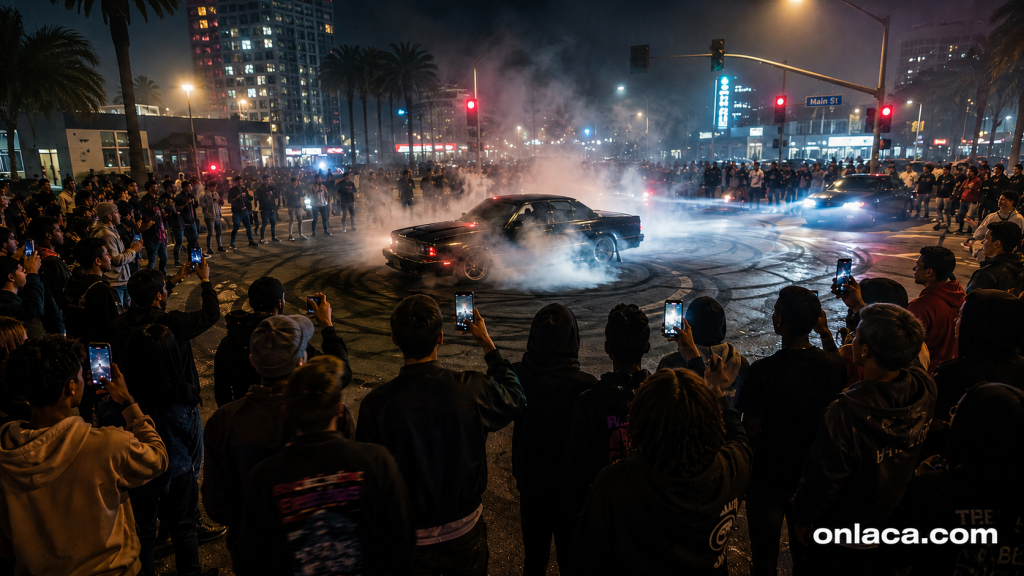
Street takeovers—often called sideshows—have exploded from a niche underground subculture into a highly organized, dangerous crisis. Coordinated via burner accounts on social media, hundreds of spectators can swarm and lock down a major metropolitan intersection within minutes. Once traffic is completely frozen, drivers take over “the pit” to perform reckless, high-speed stunts like burnouts and tight donuts. While drivers chase clout and viral video clips, neighboring residents are left dealing with property destruction, deafening noise, and blocked emergency routes.
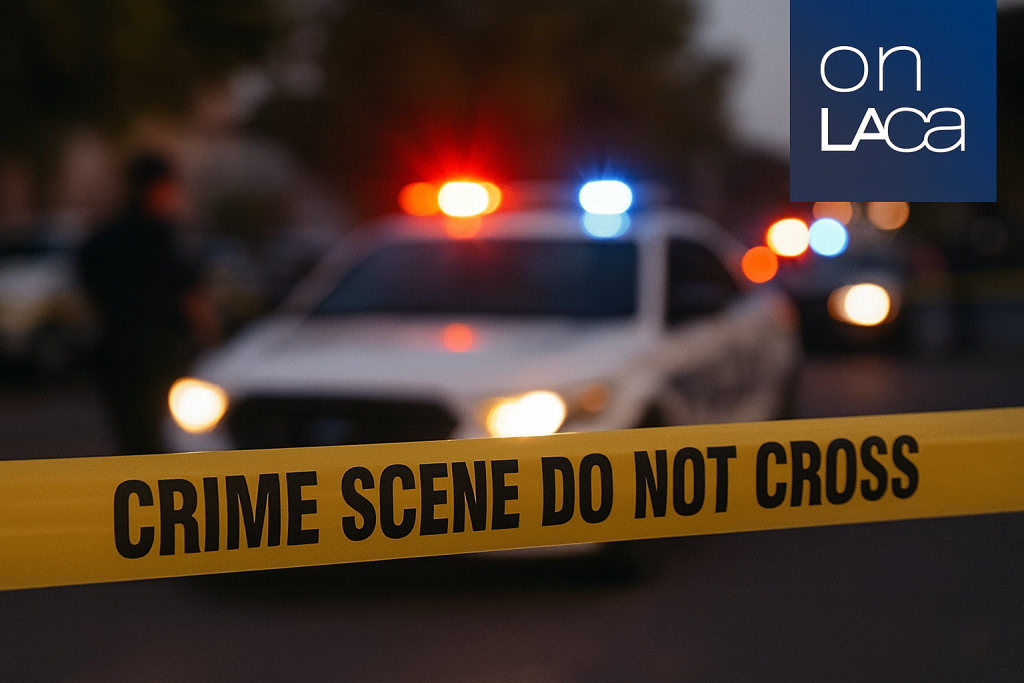
The violent reality of these gatherings hit home on Sunday, July 26, 2026, during a chaotic wave of takeovers across Los Angeles County. In North Hills, paramedics rushed to Plummer Street and Haskell Avenue after a drifting black sedan plowed straight into a packed crowd. The impact knocked one bystander unconscious and left another with a near-amputated leg; the driver immediately sped off in a hit-and-run that is still under active investigation by the LAPD. Just hours later, another takeover erupted in Northridge, where a car slammed into a dense crowd and injured five more people. Look at this takeover recently in Orlando, Florida:
Beyond the threat of getting hit by a car, police warn these events are magnets for wider criminal chaos, including arson, looting, and gunfire. Recent weekend takeovers in Boyle Heights and Watts quickly devolved into fires, illegal fireworks, and shootings, including an incident where a spectator was shot twice. Law enforcement leaders emphasize that these intersections are turning into volatile danger zones fueled by stolen cars and gang elements, frequently catching innocent bystanders in the crossfire.
The economic fallout forces local cities to drain public funds just to clean up the aftermath. The intense heat and friction from prolonged burnouts quickly shred asphalt, melting lane markings and forcing costly emergency repaving. Stunt drivers routinely smash into concrete medians, shear off traffic signs, and burn down plastic reflective barriers with fireworks. Between heavy equipment repairs and cleanup crews clearing toxic tire residue, a single night of chaos easily saddles a city with tens of thousands of dollars in unexpected bills.
In response, states like California are throwing the book at both drivers and spectators. New, stricter laws allow police to immediately impound cars, suspend driver’s licenses for up to six months, and hand down jail time alongside steep fines. Even the online organizers setting up the events now face severe felony charges. To back this up, multi-agency task forces utilize specialized tactical teams, aviation units, and drones to track digital footprints and break up crowds before they can form.
While managing groups of over 500 vehicles is a massive headache, aggressive policing and new street designs are starting to move the needle—though the progress remains highly localized. Data from the L.A. County Chief Executive Office shows that street takeovers dropped by about 56% over a recent six-month stretch, a statistic that strictly applies to unincorporated areas and contract cities patrolled by the Sheriff’s Department (LASD). Deputies credit this drop to heavier patrols and “target-hardening” infrastructure like raised yellow plastic intersection bumpers. However, because this heavy enforcement has squeezed drivers out of county-secured zones, takeovers are frequently bleeding into neighboring independent municipalities.
Cities like Long Beach and Manhattan Beach have recently battled sudden, massive weekend spikes—including a single “teen takeover” in Long Beach that swarmed an entire neighborhood for hours—demonstrating that the trend is shifting geographically rather than disappearing entirely.
AI assisted in the preparation of this article.