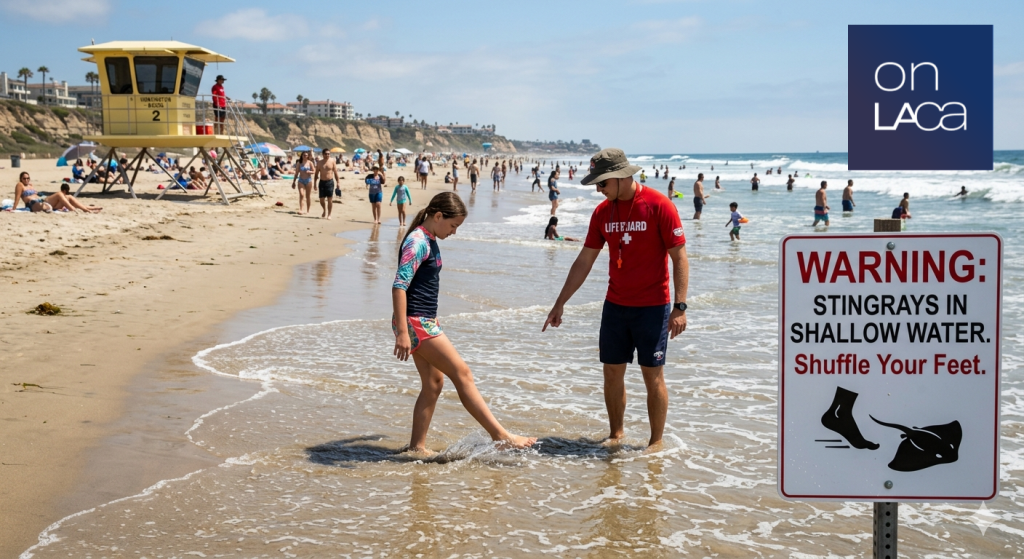
Beachgoers need to be careful when jumping into the ocean this week. A massive marine heat wave is pushing ocean temperatures into the 60s and keeping them there. While this warm water feels great to swimmers, it is also drawing an unprecedented number of round stingrays right into the shallow surf zone.
Lifeguards report that stingray stings have doubled compared to last year. If you plan on visiting the coast, here is what you need to know to stay safe.
The Numbers: Where Are the Stings Happening?
-
- Huntington Beach & Bolsa Chica: These locations are experiencing the biggest surge, recording over 3,100 stingray incidents combined so far this year.
- San Diego County: Local beaches saw more than 900 stings during just the first half of the year, marking a five-year record high.
–Why Are There So Many Stingrays?
Stingrays thrive in warm, subtropical conditions. Due to climate change and human-caused warming, local waters never dropped below 60 degrees all winter. Female rays are crowding the shorelines because they favor warmer temperatures for reproduction, while male stingrays are coming in close to hunt for food.
Because these bottom-dwellers like to bury themselves flat under the wet sand to hide from predators, they are entirely invisible to people wading in the water. When a swimmer accidentally steps down on a ray, the animal instinctively flicks its tail upward, driving its sharp, venomous barb into the person’s foot or ankle.
🦶 How to Protect Yourself: Do the “Stingray Shuffle”
The best defense against a painful sting is simple. Do not lift your feet to take normal steps when walking through the waves. Instead, drag and slide your feet flat along the top of the sand. This motion creates vibrations that scare the stingrays and forces them to safely glide away before you can step on them.
–What to Do If You Get Stung
If you feel a sharp puncture wound, do not panic, but act quickly to manage the intense pain.
-
- Find a Lifeguard: Head directly to the closest lifeguard tower for assistance.
- Soak in Hot Water: Soak the injury in clean, fresh water heated between 104 and 113 degrees Fahrenheit. Keep it submerged for 30 to 90 minutes. The heat breaks down the venom and stops the pain.
- Avoid Home Remedies: Do not apply alcohol, urine, or ammonia to the wound, as these will not help and can worsen irritation.
- See a Doctor If Needed: Seek professional medical care if the barb is still stuck, if the wound is bleeding heavily, or if you spot signs of a spreading infection.
AI aided in compiling this report