Have you noticed the funny honeycomb like thing on the parking meters in Santa Monica? Is it a camera surveilling you? A loudspeaker for emergency announcements? An outdoor air conditioner? Nope. It’s another way to capture your money.
As controversy continues over Flock license-plate-reading cameras and the information they collect about motorists, another less conspicuous piece of technology is sitting on thousands of Santa Monica parking meters.
The devices mounted beneath many meters are vehicle-detection sensors made by IPS Group. Unlike Flock cameras, they are not designed to read license plates or identify drivers. Instead, the sensors use stereoscopic optical technology and a magnetometer to detect when a vehicle enters and leaves a parking space. IPS says the technology provides real-time occupancy information that can be used for parking management and enforcement. Making sure you pay to park, and maximizing the revenue.
There is also a revenue angle. IPS has cited Santa Monica as an example of its technology’s ability to reset a meter when a vehicle leaves, eliminating whatever paid time remained for the next driver. The company previously quoted a Santa Monica parking official saying meter resets generated approximately $1.4 million in additional annual revenue across roughly 6,500 meters.
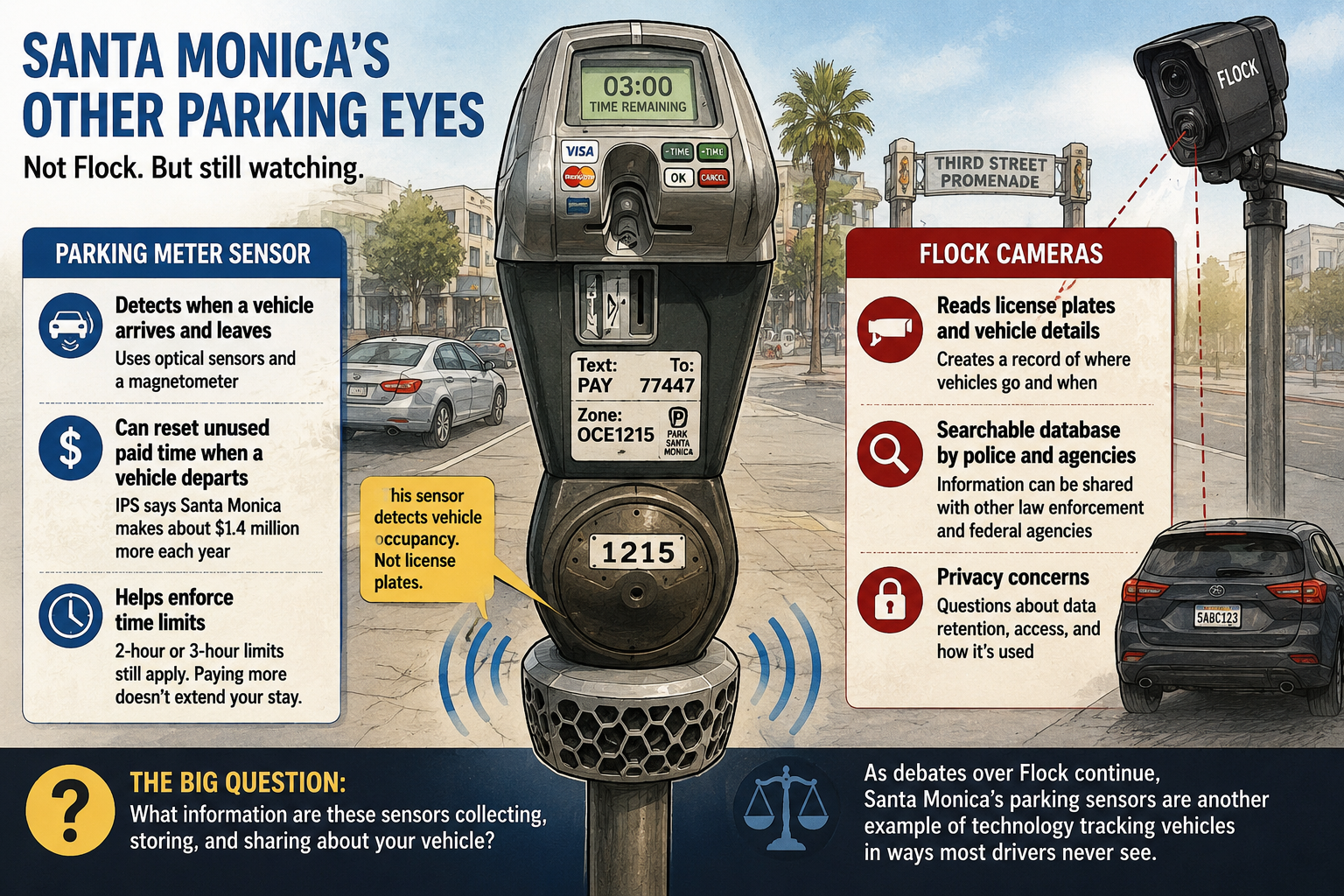
The sensors also raise a timely question in the wake of the Flock controversy: exactly what information is being collected and retained? There is no evidence these meters operate like Flock’s searchable license-plate network, and the two technologies shouldn’t be equated. But the parking sensors can electronically detect a vehicle’s presence and departure and feed occupancy information into a centralized parking system—technology most motorists probably pass without realizing what it does.
That matters when a sign says two- or three-hour parking. Adding more money doesn’t necessarily extend the posted maximum stay. A vehicle sensor can establish that the space remained continuously occupied rather than being vacated for another motorist. The unanswered question is how extensively Santa Monica uses that information for enforcement—and, amid heightened scrutiny of vehicle-tracking technology, whether the public deserves a clearer explanation of exactly what these little devices see, store and share.
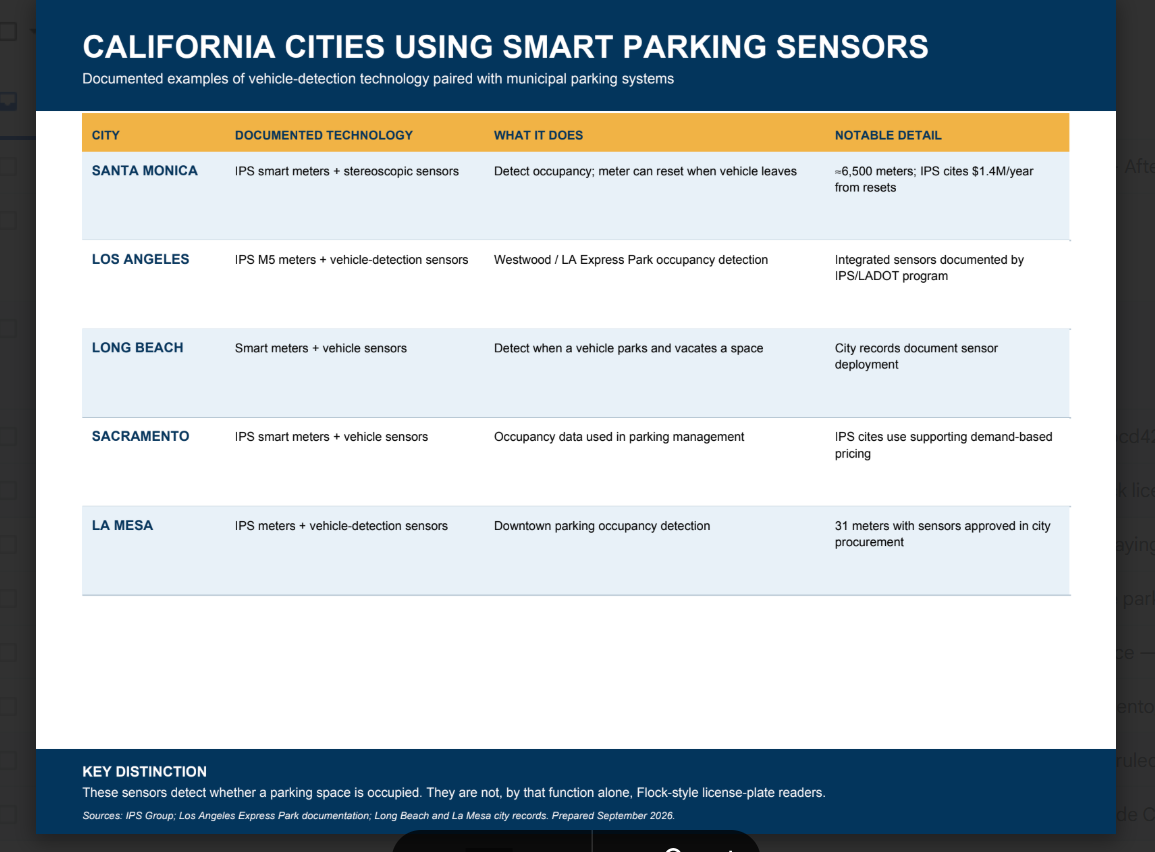
So while the controversial Flock cameras are employed for law enforcement, these parking devices are employed to enforce parking laws–and maximize the revenue generated by a parking space. But it is still government watching what you do, how you behave. Are you okay with that? Happy motoring.
AI helped in preparation of this story